


 Updated
Did you know that the best time to trade gold is rarely just the hour with the biggest candle?
According to data by the London Bullion Market Association (LBMA), gold trading turnover was at $1,006.13bn for the 12-week moving average period ending 12 June 2026. Yet, that activity does not appear evenly across every session.1
For gold traders around the world, timing is mostly about execution quality. Liquidity, spread, volatility, and scheduled economic data can all change within the same trading day. A chart setup that looks clean during quiet Asian hours may behave differently when London and New York liquidity arrive.
This guide seeks to explain the best time to trade gold by session, region, timeframe, and market condition. It also shows when XAU/USD traders should be careful and where extended-hours gold access fits in.
Key Points
- The London-New York overlap is usually the most active XAU/USD trading window.
- High-impact US data can change gold liquidity, spreads, and fill quality quickly.
- The best time to trade gold typically depends on session activity, strategy type, and risk tolerance.
When Is The Best Time To Trade Gold?
There is no single ‘best’ time to trade gold. That said, the most popular time to trade XAU/USD is usually the London-New York overlap, roughly 13:00-17:00 GMT or 08:00-12:00 ET. This is when European and US market participation are both active, giving gold a stronger mix of liquidity, macro catalysts, and order flow.
However, traders and investors should take note that this window doesn’t automatically produce better outcomes. It simply means that the gold market is often more active, spreads may be more competitive, and price discovery can be clearer than during thinner parts of the trading day.
The World Gold Council (WGC) highlighted that London has historically been the centre of the gold trade, estimating that the London OTC market accounts for approximately 70% of global notional trading volume. It also highlights London’s time-zone advantage in bridging Asian and US trading hours.2
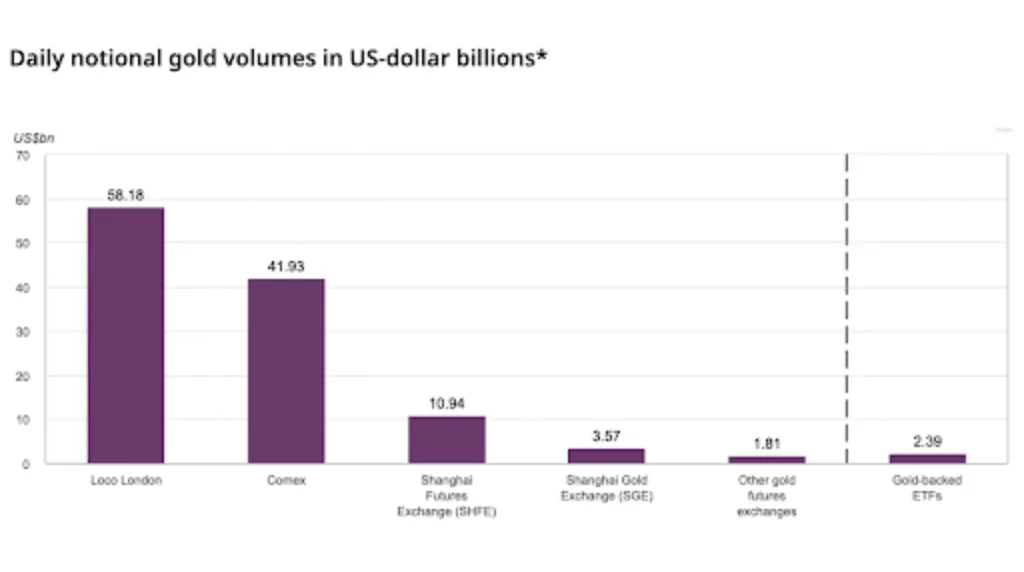
Image credit: World Gold Council (WGC)
| Vantage Pro Tip: The best time to trade gold is not automatically the most volatile hour. A cleaner window is one where liquidity, spreads, news risk, and your setup all line up. |
Why the London-New York Overlap Matters for Gold
The reason why the London-New York overlap matters for trading gold is because the precious metal (XAU) is priced in US dollars. The following factors can all reprice XAU/USD quickly:
- US inflation data
- Labour-market releases
- Federal Reserve decisions
- Treasury yields
- US dollar moves
Vantage Markets’ news trading gold guide noted that CPI, Non-Farm Payrolls, and central bank decisions can move XAU/USD by shifting expectations around interest rates, yields, and the US dollar.
Meanwhile, London matters for a different reason. As it sits between Asia and the US and carries major OTC gold activity, London often helps to shape the day’s first cleaner move after the Asian range. When London remains active as New York opens, the market has two major centres pulling liquidity into the same window.
The practical implication is simple: More activity can theoretically create more trading opportunities—but it can also create faster reversals. A higher-liquidity session still needs a defined level, position size, and invalidation point before any order ticket is opened.
What Is the Gold Session Timing by Region?
The table below keeps the focus on timing windows, not full market-open mechanics. For a deeper explanation of gold trading hours, market opens, daily breaks, and weekend closures, check out our guide on “Gold Trading Hours: When Does the Gold Market Open?”.
| Region | Main Window To Watch | Why It Matters |
| GMT / UK | 13:00-17:00 GMT | London-New York overlap for XAU/USD activity |
| ET | 08:00-12:00 ET | Early New York and overlap activity |
| IST | 18:30-22:30 IST | Evening access to European and US activity |
| UAE | 17:00-21:00 GST | Late-day overlap with London and New York |
| AEST | 23:00-03:00 AEST | Late-night US activity window |
These windows are approximate because daylight saving time (DST) can shift the GMT equivalent. Broker product specifications should be treated as the final reference for exact platform access.
When Is the Best Time to Trade Gold Futures vs. Gold CFDs?
Gold futures and XAU/USD CFDs are connected by the same underlying precious metal, but they are not the same trading product. Futures follow exchange-defined contract rules, while CFD access depends on the broker, platform, product specification, and liquidity available at the time.
| Market | Main Timing Reference | Why It Matters |
| Gold Futures | CME Globex and exchange-defined contract hours | Centralised futures market with a scheduled daily break |
| Gold CFDs | Broker product hours and underlying gold liquidity | Spread, margin, leverage, and platform access may differ by broker |
| Spot Gold / OTC | Global dealer liquidity | Activity varies by financial centre and participant flow |
CME Group listed gold futures on CME Globex from Sunday to Friday, 6:00 p.m. to 5:00 p.m. ET, with a 60-minute daily break beginning at 5:00 p.m. ET.3
In GMT terms, that broadly means a Sunday open around 22:00 or 23:00 and a Friday close around 21:00 or 22:00, depending on US daylight saving time.
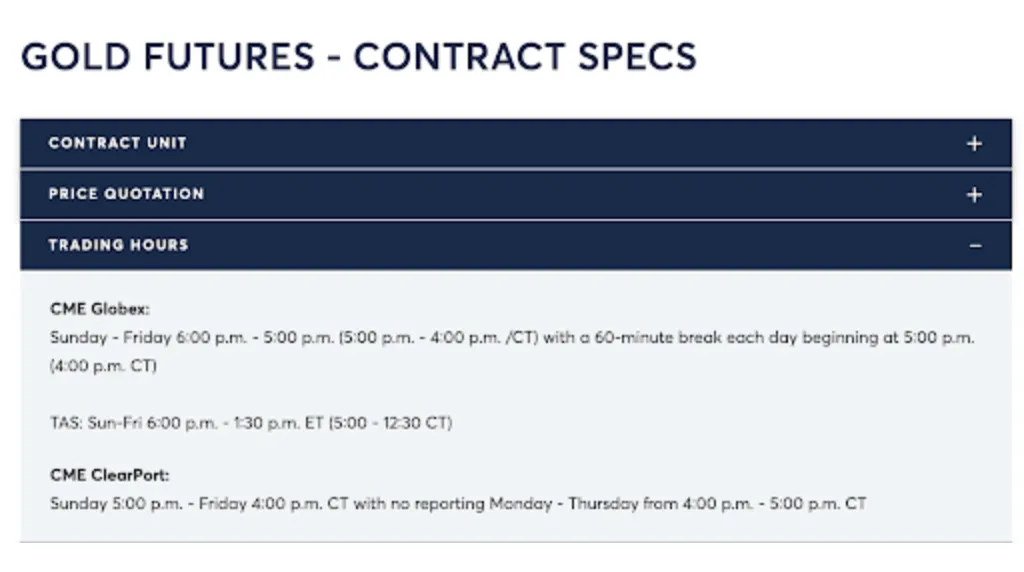
Image credit: CME Group
What Are the Best Days to Trade Gold?
The best days to trade gold depend less on the day itself and more on the calendar. To illustrate, a Tuesday with no major releases can be quieter than a Friday with US inflation data, payrolls, or a central-bank speech.
That said, midweek sessions often receive more attention because scheduled economic data and institutional flows tend to be more active after the Monday reopen. Mondays tend to reflect weekend repricing, while Fridays can bring position adjustment before the weekly close.
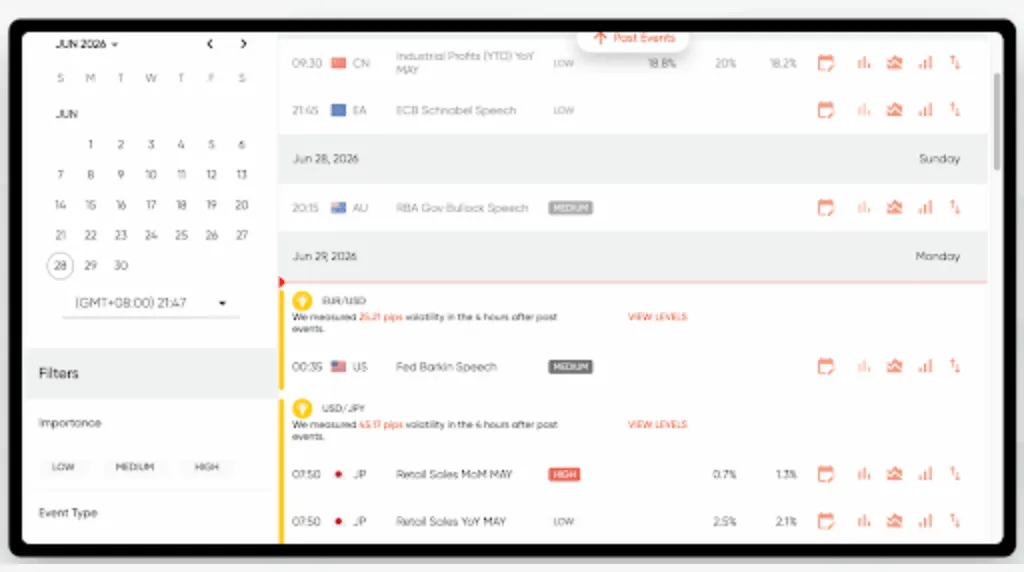
Before asking whether today is a good day to trade gold, traders and investors can check Vantage Markets’ Economic Calendar to find out more about major economic releases, central bank decisions, and global market-moving events that can affect financial markets.
| Vantage Pro Tip: A quiet chart can change quickly around CPI, NFP, or Federal Reserve events. Timing works best when the session, calendar, and trade setup point in the same direction. |
What Are the Best Timeframes to Trade Gold?
In essence, there is no single ‘best’ timeframe to trade gold. The right chart depends on the holding period, setup type, and how much intraday noise the trader can tolerate.
| Timeframe | Practical Use | Main Risk |
| Daily | Broader trend and major levels | Too slow for short-term execution |
| 4-Hour | Swing structure and session bias | Can miss fast intraday reversals |
| 1-Hour | Intraday direction and pullback zones | Vulnerable to news spikes |
| 15-Minute | Entry refinement and short-term setups | Usually encounters more false breaks and chart noise |
| 5-Minute | Fast execution and short-term monitoring | Higher noise and faster stop-outs |
A practical workflow is designed to use the higher timeframe for direction and the lower timeframe for timing. This avoids treating a five-minute candle as the whole story when the broader XAU/USD structure says otherwise.
For strategy-specific examples, check out Vantage Markets’ guide to XAU/USD trading strategies.
Is It Good to Trade Gold at Night?
It can be, but the definition of ‘night’ would depend on where the trader is based. For a trader in Singapore, India, or the UAE, evening hours may overlap with London or early New York activity. For a US-based trader, nighttime trading often means Asian-session liquidity, which can be thinner.
| Location | Active Gold Windows to Watch | Practical Note |
| UK / GMT | 13:00-17:00 GMT | London-New York overlap |
| Eastern Time | 08:00-12:00 ET | Early New York and overlap window |
| India | 18:30-22:30 IST | Evening overlap with Europe and the US |
| UAE | 17:00-21:00 GST | Late afternoon to evening overlap |
| Australia | 23:00-03:00 AEST | Late-night US activity window |
When Should You Be Careful Trading Gold?
The most active time for gold trading is not always the cleanest time. Gold can move quickly during high-impact releases, but fills can deteriorate when spreads widen, liquidity thins, or price jumps through the intended level.
- Daily Rollover: Orders may pause, spreads can widen, and short-term charts can become messy around rollover.
- High-Impact News: CPI, NFP, and central bank decisions can trigger sharp XAU/USD repricing.
- Thin Holiday Sessions: Reduced participation can make price action less reliable.
- Weekend Reopens: News that breaks while standard markets are closed can create gaps at the next open.
- Low-Liquidity Windows: Smaller flows can make spreads and slippage more noticeable.
This is where timing meets risk control. Read Vantage Markets’ XAU/USD risk management guide for deeper rules on position sizing, margin, and leverage before placing live gold CFD trades.
Does 24/7 Gold Access Change the Best Time to Trade XAU/USD?
Standard XAU/USD access and extended-hours gold products serve different trading needs, so they should not be treated as identical. The main weekday sessions might still offer stronger liquidity, but extended access is designed to give traders more flexibility when gold prices react to weekend news, geopolitical events, or market-moving developments outside standard hours.
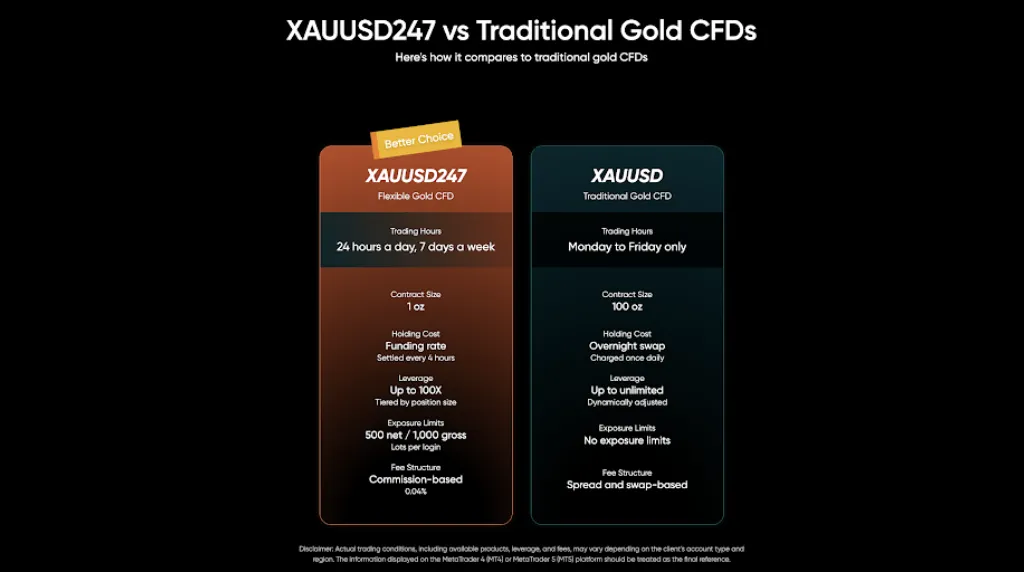
Vantage Markets offers XAUUSD247 in selected regions as a 24/7 gold CFD product. As its name suggests, this XAU/USD CFD is designed to give traders and investors access to gold markets that go beyond the standard trading hours. It uses a funding-rate mechanism settled every four hours rather than traditional overnight swap charges and offers leverage up to 100x (tiered by position size), which can magnify both potential gains and potential losses.
| Vantage Product Note: Our XAUUSD247 product is designed to add trading flexibility, but its 24/7 access does not necessarily mean every hour is equally tradable. Traders should check product specifications, funding rate, spread, margin, and regional availability before trading. |
How to Use Gold Market Timing in Your Trade Plan
The best time to trade gold should sit inside a trade plan, not replace one. A timing window only matters if the setup, risk level, and execution conditions are already defined.
- Choose the Session: Decide whether the setup belongs to the Asian range movement, London momentum, or New York macro activity.
- Check the Calendar: Review CPI, NFP, Federal Reserve decisions, and other scheduled events before opening the ticket.
- Confirm the Timeframe: Match the chart timeframe to the expected holding period.
- Check Spread and Liquidity: Avoid assuming every open market is equally tradable.
- Define Risk Before Entry: Set position size, invalidation level, and leverage exposure before live execution.
Trade Gold Around Liquidity, Not Just the Clock
The best time to trade gold is not just when the market is open. Instead, it’s when liquidity, spreads, event risk, and the trade setup are aligned well enough for the trader to make a defined decision.
The London-New York overlap is usually the main window to watch, but the clock is only one layer. The calendar, the instrument, the timeframe, and the order ticket still matter.
To put this timing framework into practice, traders may choose to practise using a Vantage Demo Account before deciding whether live trading is appropriate for their circumstances. Traders and investors should keep in mind that gold CFDs involve leverage, which can magnify favourable and unfavourable price moves.
Frequently Asked Questions (FAQs)
When Is the Best Time to Trade Gold?
The London-New York overlap is usually the most popular time to trade gold due to its activity and liquidity levels. This window roughly takes place from 13:00 to 17:00 GMT (or 08:00-12:00 ET), depending on daylight saving time. Higher activity can improve price discovery, but it can also produce faster reversals and increase execution risk.
What Is the Best Time to Trade XAU/USD in GMT?
The best time to trade XAU/USD in GMT is usually around 13:00-17:00 GMT, when London and New York are both active. XAU/USD traders should treat this as a timing guide, not a fixed rule. DST, broker hours, product specifications, and public holidays can all affect actual trading conditions.
For standard gold market open and close times, see Vantage Markets’ full guide to gold trading hours.
What Is the Best Time to Trade XAU/USD in EST?
The best time to trade XAU/USD in EST is usually around 08:00-12:00 ET (or around 12:00–17:00 GMT, depending on US daylight saving time). That window captures the early New York trading and the London-New York overlap. Take note that US data can make this period more volatile, so spreads and slippage should be checked before execution.
What Is the Best Session to Trade Gold?
The London-New York overlap is usually the most active gold trading session. London and New York also matter separately because London carries major gold market participation, while New York brings US macro data, Treasury-yield sensitivity, and dollar movement. The Asian session can still matter when China-linked sentiment or regional demand shifts.
Is It Better to Trade Gold During News?
Contrary to what some traders believe, it is not always better to trade gold during news. While headlines can create large moves in XAU/USD, they can also widen spreads, trigger slippage, and cause fast reversals. Traders should treat major releases as risk events, not automatic trading opportunities.
What Is the Best Timeframe to Trade Gold?
There is no universal ‘best’ timeframe to trade gold. Daily and 4-hour charts can help define broader structure, while 1-hour, 15-minute, and 5-minute charts are more common for intraday timing. The timeframe should match the holding period and the trader’s tolerance for noise.
Can Beginners Trade Gold During The London-New York Overlap?
Beginners can observe or practise trading during the London-New York overlap, while keeping in mind that higher activity does not mean lower risk. Beginner traders should strive to understand spread changes, leverage, stop-loss placement, and news risk before going live. A Vantage Demo Account can help traders test their workflow before risking real capital.
RISK WARNING: CFDs are complex financial instruments and carry a high risk of losing money rapidly due to leverage. You should ensure you fully understand the risks involved and carefully consider whether you can afford to take the high risk of losing your money before trading.
Disclaimer: The information is provided for educational purposes only and doesn’t take into account your personal objectives, financial circumstances, or needs. It does not constitute investment advice. We encourage you to seek independent advice if necessary. The information has not been prepared in accordance with legal requirements designed to promote the independence of investment research. No representation or warranty is given as to the accuracy or completeness of any information contained within. This material may contain historical or past performance figures and should not be relied on. Furthermore estimates, forward-looking statements, and forecasts cannot be guaranteed. The information on this site and the products and services offered are not intended for distribution to any person in any country or jurisdiction where such distribution or use would be contrary to local law or regulation.
References
1. “LBMA Daily Trade Reporting Data — London Bullion Market Association”. https://www.lbma.org.uk/prices-and-data/lbma-daily-trade-reporting-data. Accessed on 1 July 2026.
2. “The Global Gold Market — World Gold Council”. https://www.gold.org/gold-market-structure/global-gold-market. Accessed on 1 July 2026.
3. “Gold Futures Contract Specs — CME Group”. https://www.cmegroup.com/markets/metals/precious/gold.contractSpecs.html. Accessed on 1 July 2026.